
Joining the SBRT
In October 2025, Marcatus QED became a member of the Sustainable Business Roundtable, founded by ESMT Berlin. The Roundtable brings companies from different industries together to work through the sustainability problems none of them can solve alone.
For us, membership was a way to take what we have learned in agricultural supply chains into a wider conversation, and to learn from sectors facing the same pressures from a different angle.
The announcement of our membership is covered in ESMT’s press release on the 30th meeting: ESMT Berlin Sustainable Business Roundtable: 30th meeting with new members and focus on AI
The 30th meeting: AI and sustainability
In November 2025 we joined the SBRT community in Berlin for the 30th Roundtable, which focused on AI, sustainability, and where responsible business goes next.
We came to that table with 25 years in agriculture and value chain innovation behind us. The work started by walking into fields to understand what farmers were actually dealing with. It has since grown into a network built on responsible farming, learning on the ground, and long-term partnership. Our training programs and sustainable practices now reach more than 10,000 farming families and help strengthen supply chains for clients worldwide.
The 31st meeting: rethinking resources
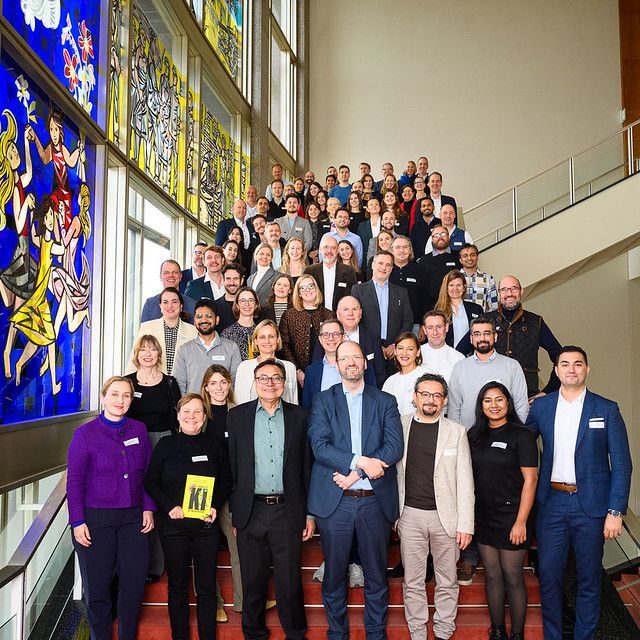
In 2026, Marcatus QED took part in the 31st Roundtable under the theme “Rethinking Resources: Securing Sustainable Access and Use.”
Close to 50 companies took part. As a member, we brought the agriculture perspective, raising the practical realities of water, soil health, and labour shortages, and what is being done about them on the ground.
Emmanuel Mancion spoke about how we support and educate farmers through our Responsible Farming Program and Mobile Education Platform, and how that helps them adopt practices that hold up under pressure.
One point came through clearly across the day: you cannot secure resources sustainably without accounting for food systems and the people who produce our food.
What we took away
Four things from the discussion stayed with us.
- Circularity is being treated as a resilience strategy rather than only an environmental one, and companies are increasingly looking at it through procurement, supply security, and profitability.
- Europe’s resource challenge is not only a supply problem. Real change has to happen on the demand side too.
- Water is becoming a board-level issue, but it is still under-discussed relative to its importance.
- The circular economy is shifting from ambition to execution.
Our thanks to ESMT Berlin and all team members for convening the exchange. We were glad agriculture had a voice in the room, and we look forward to continuing the conversation.